



Happy 40th birthday to The George!
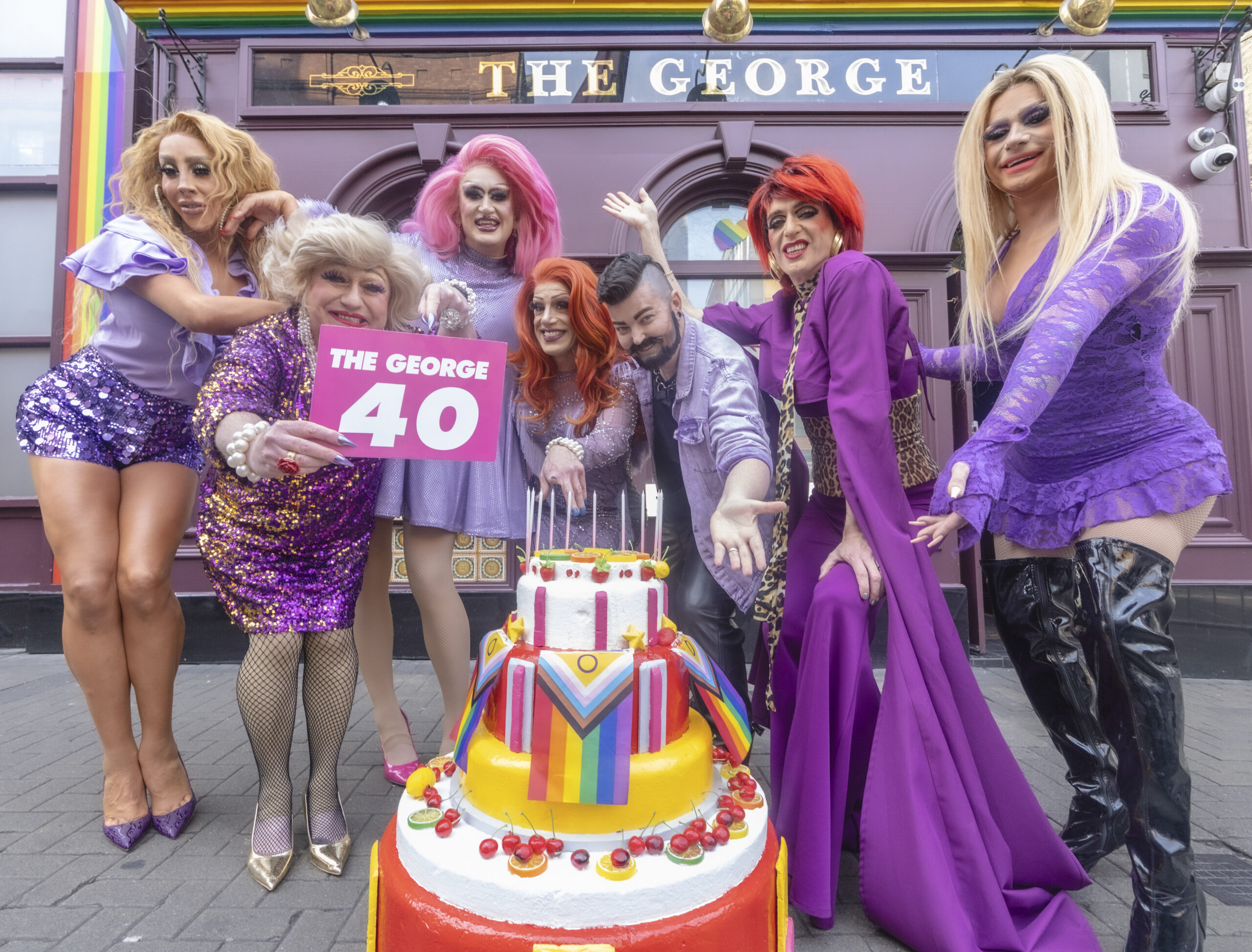
Davina Divine, Dolly, Victoria Secret, Shirley Temple Bar, Phill T Gorgeous, Veda and Mizza celebrating 40 years of The George. (Photo Paul Sherwood)
The George celebrating 40 years in a big milestone for Dubin. First established in 1985, with a more official opening in 1986 (exact date unknown) The George has become one of the most enduring symbols of LGBTQ+ life in Ireland. But this is not simply the story of a late-night bar/club reaching a landmark birthday. It is the story of a venue that opened its doors when Ireland was a profoundly different place and, for 40 years, has remained a constant presence through some of the most important social changes in modern Irish history. The George’s own website describes it as a “home away from home” for LGBTQ+ people and a venue that played a pivotal role in fighting for LGBTQ+ rights and equality. That is why an organisation like this has endured for four decades, defined by its purpose and its service to its community.
Offering community
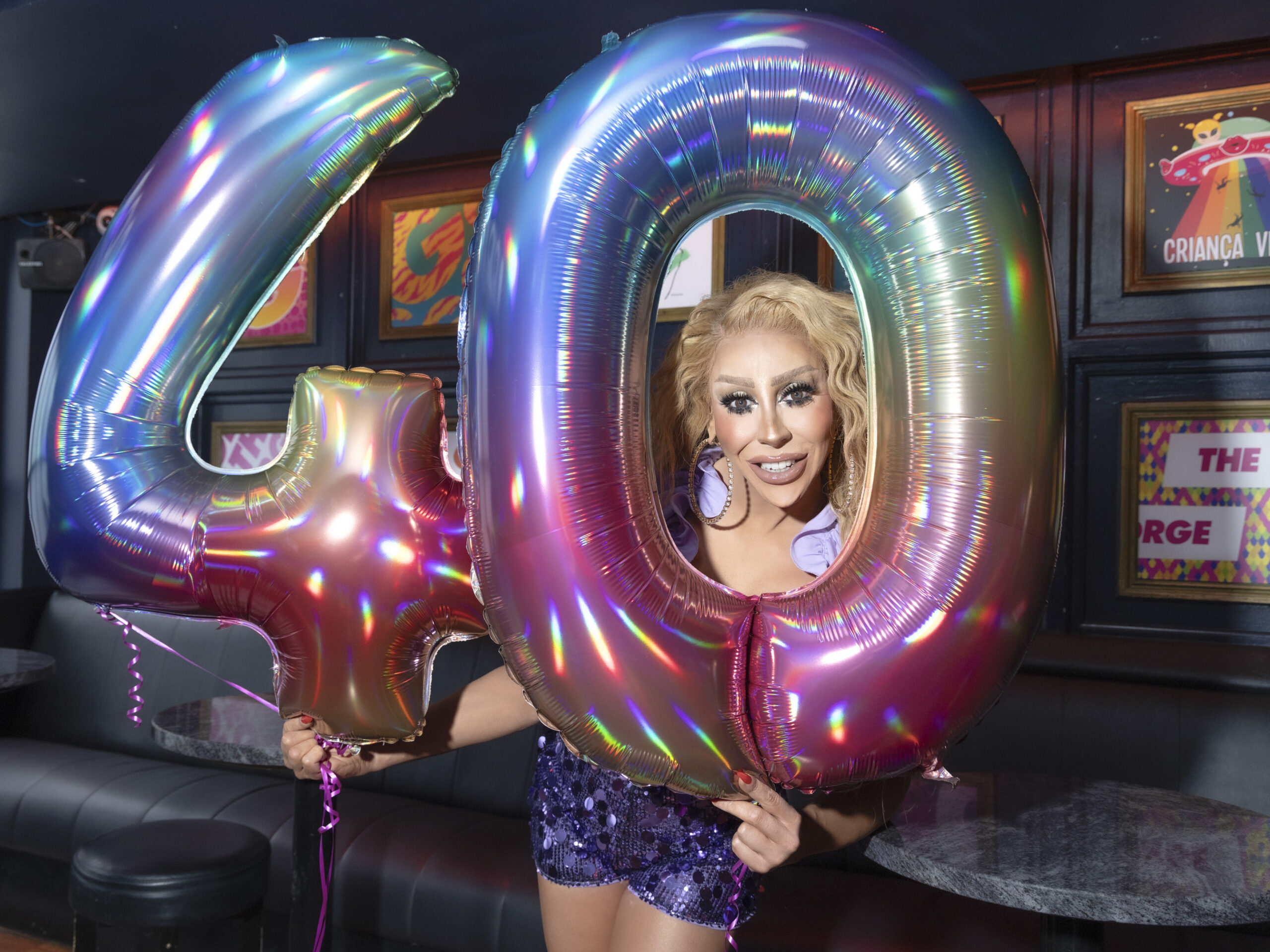
Davina Divine celebrating 40 years of The George in Dublin (Photo Paul Sherwood)
When The George first opened in 1985, homosexual sex was still criminalised in Ireland. That law would not change until 1993. For the people who found their way to South Great George’s Street in those years, stepping inside was not just about going out. It was about exhaling. It was about finding a place where you could look around the room and know that you were not the only one. In a country where silence, shame and fear still shaped daily life for many LGBTQ+ people, The George offered something radical: visibility, community and relief.
Darragh Flynn, general manager of The George says “It is important to remember that in Ireland forty years ago, entering into the George was a big step. For the first 20 years, all of our patrons had to go through a lot before they even came through our doors. Gay bashings and hate crimes were rampant across the city, and the original patrons of The George faced this daily, before they found sanctuary in us, as their one safe space”.
That is why this 40th anniversary matters so deeply. The George did not merely exist alongside the story of LGBTQ+ Ireland. It hosted it.
Defining moment
Just three years before The George opened, the murder of Declan Flynn in Fairview Park became a defining and devastating moment in Irish queer history, helping to galvanise public protest and activism. In 1987, David Norris became the first openly gay person elected to public office in Ireland. In 1993, the law finally changed and homosexuality was decriminalised.
In 1997, Shirley Temple Bar was crowned Alternative Miss Ireland, marking a defining moment in Irish queer culture. Shortly afterwards, she began hosting her now iconic weekly bingo at The George.
In 2000, the Equal Status Act 2000 was enacted, extending anti-discrimination protections across goods, services, accommodation and education, including on the grounds of sexual orientation. This marked a significant step forward for Ireland’s LGBTQ+ community.
In 2006, the marriage recognition case taken by Katherine Zappone and Ann Louise Gilligan was heard in the High Court. The case became a landmark legal challenge, helping to bring the issue of marriage equality into mainstream political debate.
Tough times
Not every moment at The George has been celebratory. In 2008, the venue was subjected to a bomb scare during Pride. The hoax threat disrupted festivities and remains one of the scariest and darkest chapters in its history.
In 2015, Ireland became the first country in the world to approve same sex marriage by popular vote, by a landslide majority. That same year also saw the enactment of the Gender Recognition Act.
In 2017, Leo Varadkar became Ireland’s first openly gay Taoiseach. Across every decade of that journey, from criminalisation to constitutional change, The George remained the gathering place for the community and a witness to history.
Darragh Flynn continues: “For many people, The George has never been just a venue. It has been the first place they kissed someone they loved in public. The first room where they felt fully seen. The first room they felt they could let their guard down. The first time they met others like them. The first place they realised they might have a future in Ireland after all.”
That emotional truth is why The George has long occupied such a unique place in Irish life. In reflections on its history, people have described it as “ground zero for Dublin’s gay community”, “the beacon where people go to figure out they’re gay”, and a safe space that mattered especially in an era when the “aura of criminality” censored people’s lives.
A different Ireland
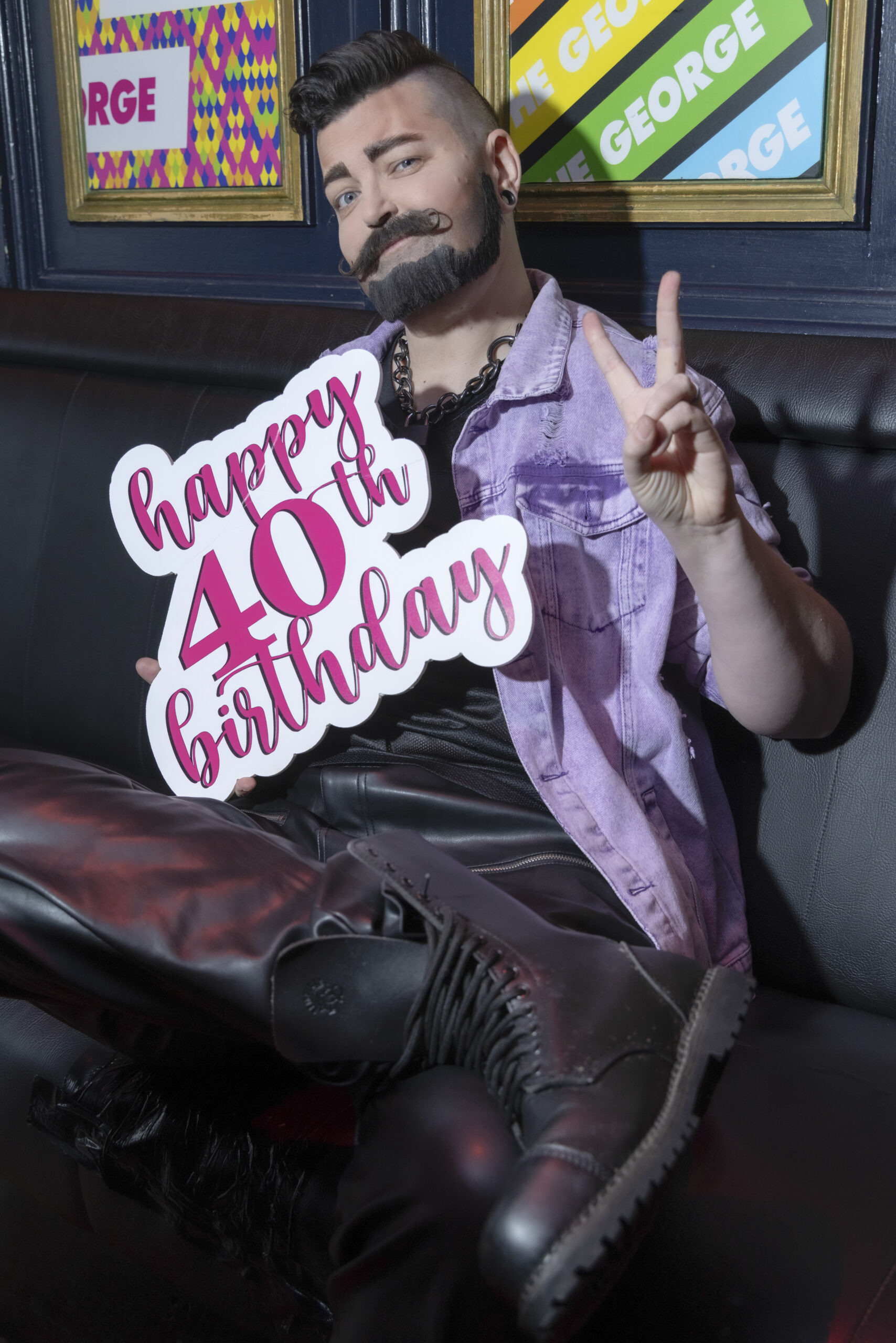
Phill T Gorgeous marking The George’s big milestone (Photo Paul Sherwood)
Today, a young person walking into The George for the first time is walking into a very different Ireland from the one that existed in 1985. They are entering a country that has changed dramatically in law, in politics and in public attitudes. But the feeling that has drawn generations through those doors remains strikingly similar: the sense that, for one night or for a lifetime, this is somewhere you can be fully yourself.
Davina Devine, one of The George’s best known and most loved performers, who has been part of the venue’s story for more than 20 years, said:
“The George means something different to every person who has ever walked through these doors, but for so many of us it has meant safety, freedom and belonging. It has been our meeting place, our stage, our escape, our celebration and, on some nights, the place that held us together.”
As The George marks this mega milestone year, it is celebrating not only its own history, but the generations of performers, staff, campaigners, artists, activists, regulars and first timers who gave it life. From the years of coded glances and caution, to the years of protest and reform, to the roar of joy that accompanied equality victories, The George has been there.
It has been there before Ireland was ready. It has been there while Ireland changed. And 40 years on, it is still there… open, vibrant and still serving the LGBTQ+ Ireland.