


Clancy’s Bar: 150 years at the heart of rural Roscommon
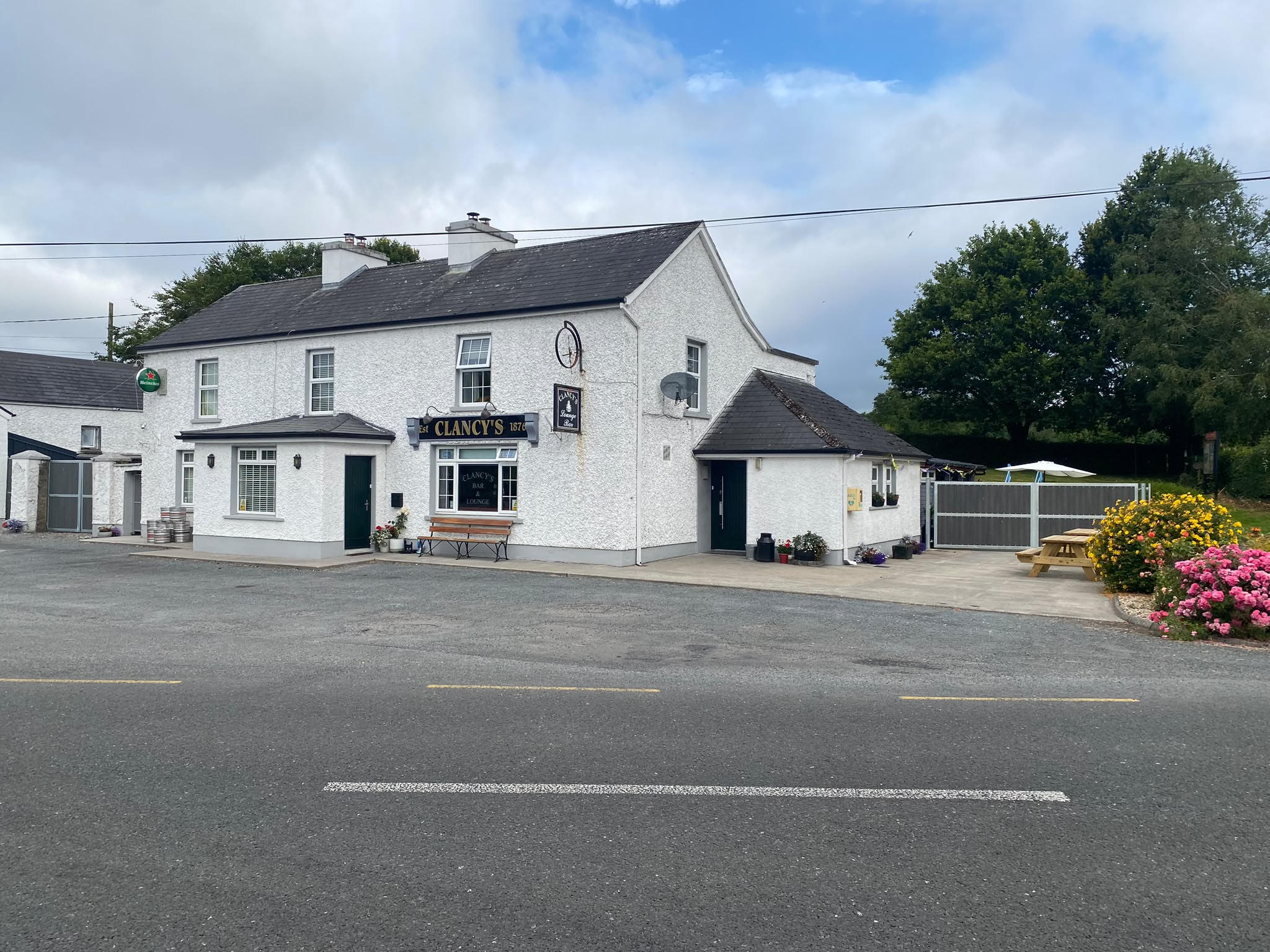
Clancy’s in Knockvicar is 150 years in operation this year
For 150 years, Clancy’s Bar in Knockvicar has been much more than a place to have a drink. Situated between Ardcarne and Keadue, close to the Leitrim border and just 12 minutes from Carrickon- Shannon, the family-run pub has become an important social hub for the surrounding community, a role that has arguably never been more important as rural Ireland’s pub network continues to shrink.
To mark the remarkable milestone, owners Ann McGonigle and her son Michael McGonigle recently presented kitbags and tops to the St Michael’s GAA Club adult teams, reinforcing a relationship that is mutually beneficial to both pub and community.
A family business
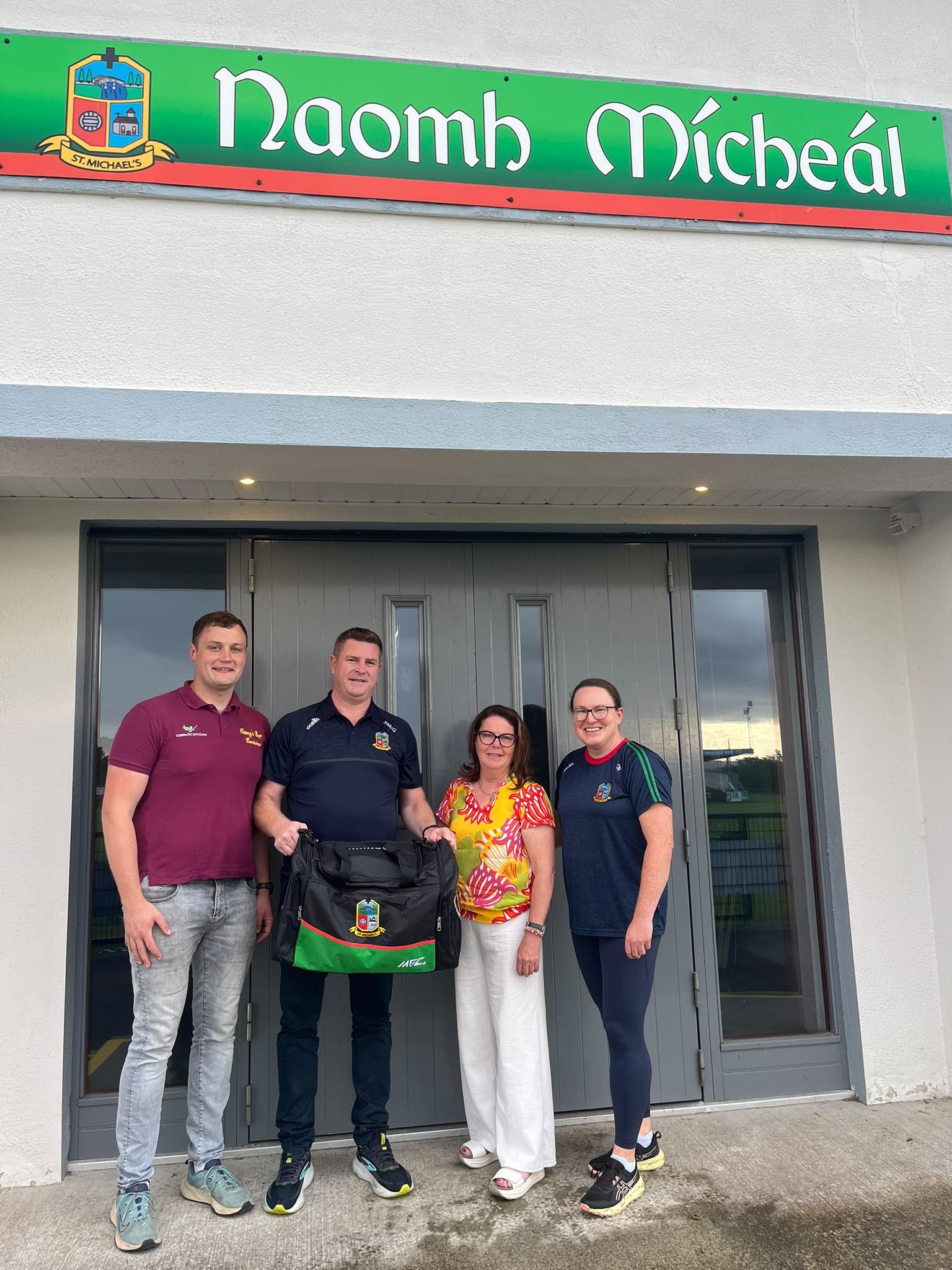
Clancy’s recently presented St. Michael’s GAA with kit bags. Pictured at the presentation were Michael McGonigle, Clancy’s Bar, Stephen McGuinness, St. Michael’s GAA chairperson, Ann McGonigle, Clancy’s Bar and Clare Noone, St. Michael’s GAA secretary
Clancy’s has been in the McGonigle family for 150 years, although Michael’s parents, Ann and the late Michael Snr, bought the pub and land from Michael’s grandmother approximately 35 years ago. Michael Snr, who had worked as a Garda, passed away in 2022 following a long period of ill health. His death was followed shortly afterwards by a stroke suffered by Ann, leaving Michael to step in and run the pub full-time for four months while taking unpaid leave from his day job. “It was the worst 18 months of my life,” he says. However, the experience also gave him a different perspective on the business.
“When I was there full-time it gaveme a really different view of it and I really loved it.” But while Michael has a clear affection for the pub and enormous pride in what his mother has achieved, taking over the business is not a straightforward decision.
“The question to ask is, is it really sustainable for me to go back there full-time and maybe rear a family from it? And to be brutally honest with you, it really doesn’t look like it.”
That is the dilemma facing many family-run pubs across rural Ireland: there may be a strong community, a loyal customer base and a deep emotional attachment to the business, but the economics of running it are increasingly difficult.
‘No one is making a good living out of it’
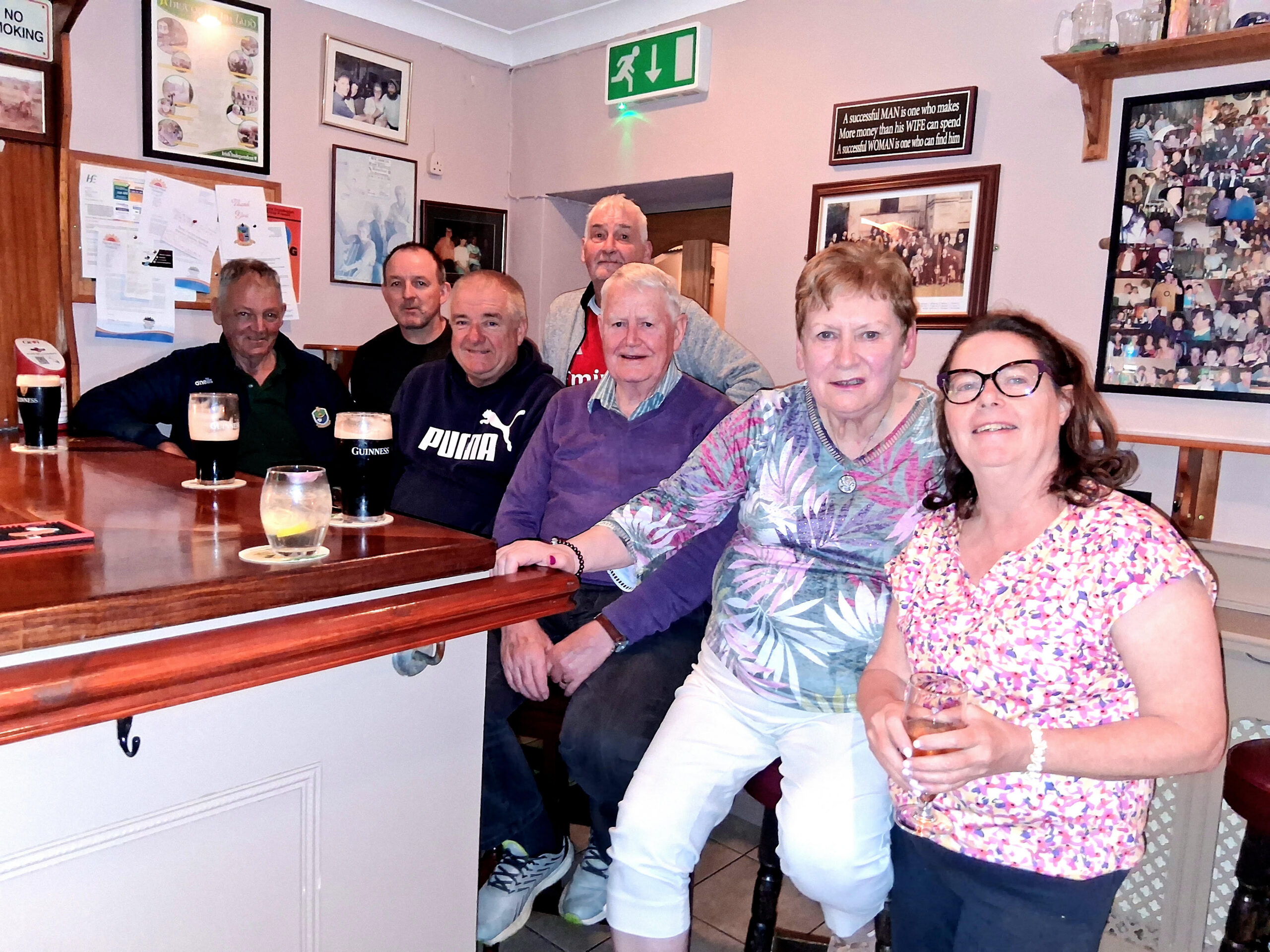
Michael says that the pub is the social hub in their community
Michael works full-time in the agricultural sector, covering a huge territory from his base in Tuam. His working week involves travelling hundreds of kilometres a day and dealing with more than 200 customers across Leinster and beyond.
His mother, meanwhile, works full time in Clancy’s, supported by four part-time employees and an extended family network that continues to contribute whenever required. His brothers and sister all play their part despite living elsewhere. “No one is making a good living out of it,” Michael says. “They are doing it because it’s a family business, and that’s what it relies on.”
The pub was finally paid off in 2016, having been supported over the years by his father’s Garda salary and pension. “So it’s been hard going for a long time,” says Michael. Yet there is no shortage of pride in what has been built. “I’m incredibly proud of what my mother has built. My granny had done a lot of work to the place and my mother has further modernised it, making it a great place to walk into and drive it on again.” The question is whether there is a viable market in which to drive it forward. “That’s the biggest fear.” says Michael.
The changing rural pub landscape
During the week, many of their regulars are aged 55 and over, with a significant proportion on pensions
The challenge is particularly acute in rural areas where there is no passing trade to fall back on. Before Covid, there were five pubs in the parish. Today, there are two. Clancy’s relies heavily on its local community, with the pub hosting cards every Tuesday night, an Irish club on Thursdays, a monthly book club and various GAA events and fundraisers.
Four times a year, Ann also organises a coffee morning for the hospice, raising approximately €4,000 annually. “We’re really relying on the local community and we’d be lost without them,” Michael says.
The pub has a bar with 12 stools, high tables, a lounge area, smoking area and beer garden. It is particularly busy around GAA matches, with customers coming in after games or to watch televised sporting events. The pub does not subscribe to Sky Sports, however, with Michael saying the cost simply does not make commercial sense for a business of its size.
There have also been discussions about introducing food, but the investment required has so far ruled it out. “We thought about doing food a few times but the investment into a full kitchen and hiring chefs, extra staff and all the regulations around it and you have to have a grá for food and we didn’t really have that.”
Rising costs and squeezed margins
Like many publicans, Michael points to the rising cost base as one of the biggest threats to the viability of the business. Electricity costs approximately €900 a month, while oil, turf and timber add further significant expense.
Rates run into thousands of euro. “We don’t do food, so that recent VAT reduction didn’t apply to us,” he says. He is particularly critical of the cost burden faced by rural businesses. “We are out in the countryside so we have no streetlights or footpaths. A pub in a town actually pays less rates than us and they get streetlights, footpaths, parking, sewerage. They get their windows cleaned and all that kind of stuff done through their rates and their tax. “We have to pay for our own sewerage system. We’ve no streetlights.”
Supplier price increases are another pressure. Clancy’s currently charges €5.80 for a pint of Guinness, with lager at €6. Michael says absorbing some supplier increases has been necessary because passing every increase directly on to customers risks pushing them away.
“Trying to tell the customers that the price has gone up overnight is very tough because people are so conscious of price.” The pub’s customer base reflects that pressure.
During the week, many of its regulars are aged 55 and over, with a significant proportion on pensions. Younger customers tend to visit around matches and events, while people of Michael’s generation are often saving for homes and are increasingly careful about discretionary spending. “We’re relying on people’s disposable income and they don’t have much of it because even the price of shopping has gone up so much.”
A serious pint of Guinness
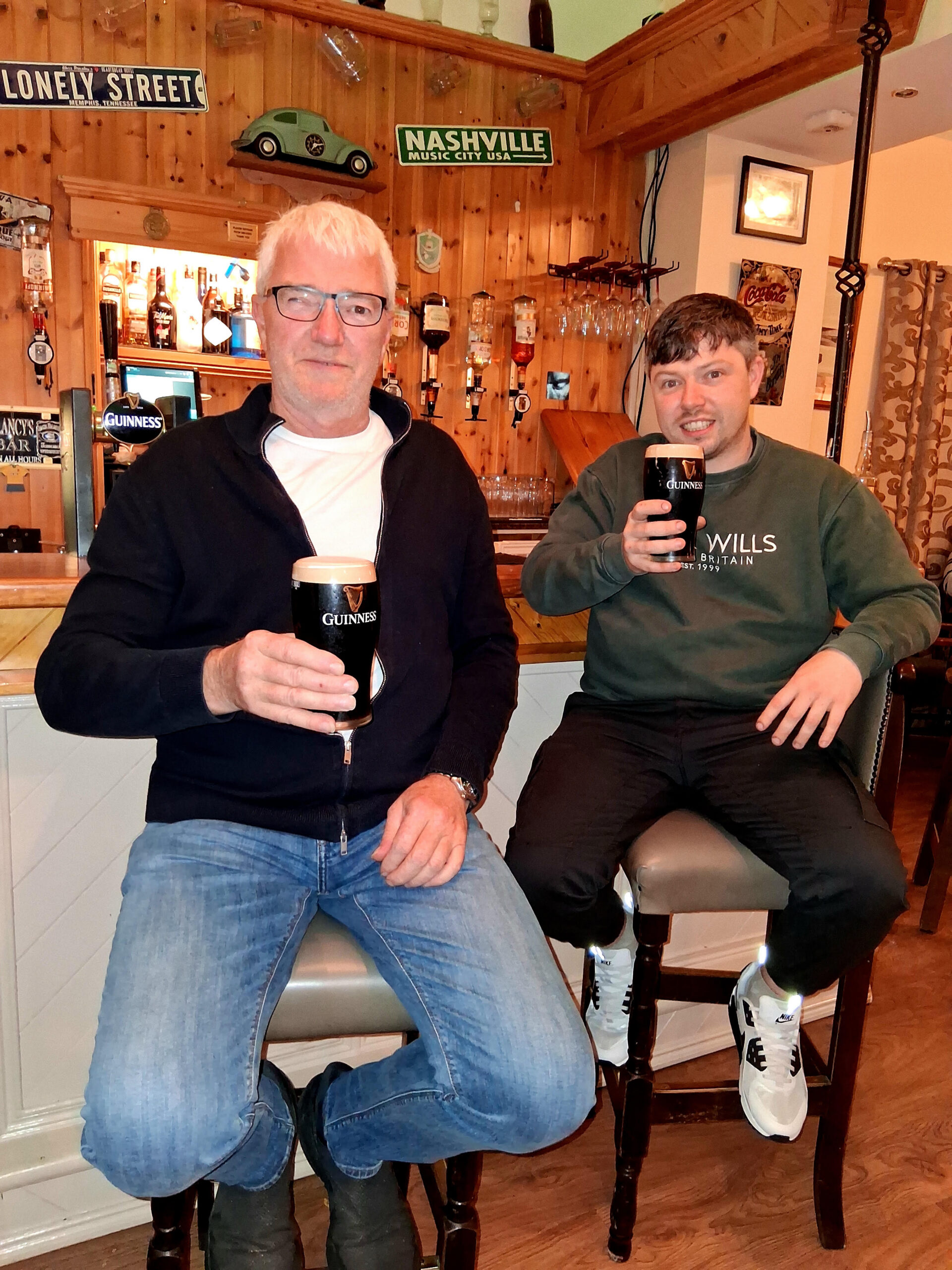
Clancy’s is renowned for its quality pints of Guinness
Despite the challenges, there are things about running Clancy’s that Michael remains fiercely proud of – chief among them the pub’s Guinness. “Our Guinness is renowned. You’d have to travel a long way to find a better pint and I don’t mind saying that. I cannot find as good a pint of Guinness as you get at home.”
The secret, he believes, is simple: cleanliness and consistency. His mother cleans the beer lines herself every Thursday, while the brewery service teams also carry out their scheduled maintenance. “It’s all about hygiene,” says Michael. That attention to detail extends throughout the pub, including the toilets and wider premises. The pub is also considering sustainability improvements and has looked at installing solar panels, although Michael says the return on investment currently does not stack up. A sustainability grant is being explored, while the pub continues to operate with traditional under-counter coolers rather than a dedicated cold room.
Looking to the future
Despite the uncertainty, Michael can see opportunities for Clancy’s if the economics can be made to work. A major wedding venue, Kilronan Castle, is located nearby, although the pub currently gets relatively little business from it. Michael believes an improved beer garden and smoking area could create an opportunity to target wedding parties, particularly second-day celebrations.
“We’ve gotten a few parties in the last few months from Boyle or Carrick-on -Shannon where they don’t want to have them in the town. If we could cater for that, you’d have to go all out with advertising and marketing to push that.” That, however, would require further investment and potentially another full-time employee.
There is also the potential to capitalise on the vibrant visitor economy in nearby Carrick-on- Shannon, which has become a major destination for hen and stag parties. But once again, the decision comes down to whether the numbers work. “It would be great to have a partner who would work in the business with me,” Michael says.
More than a pub
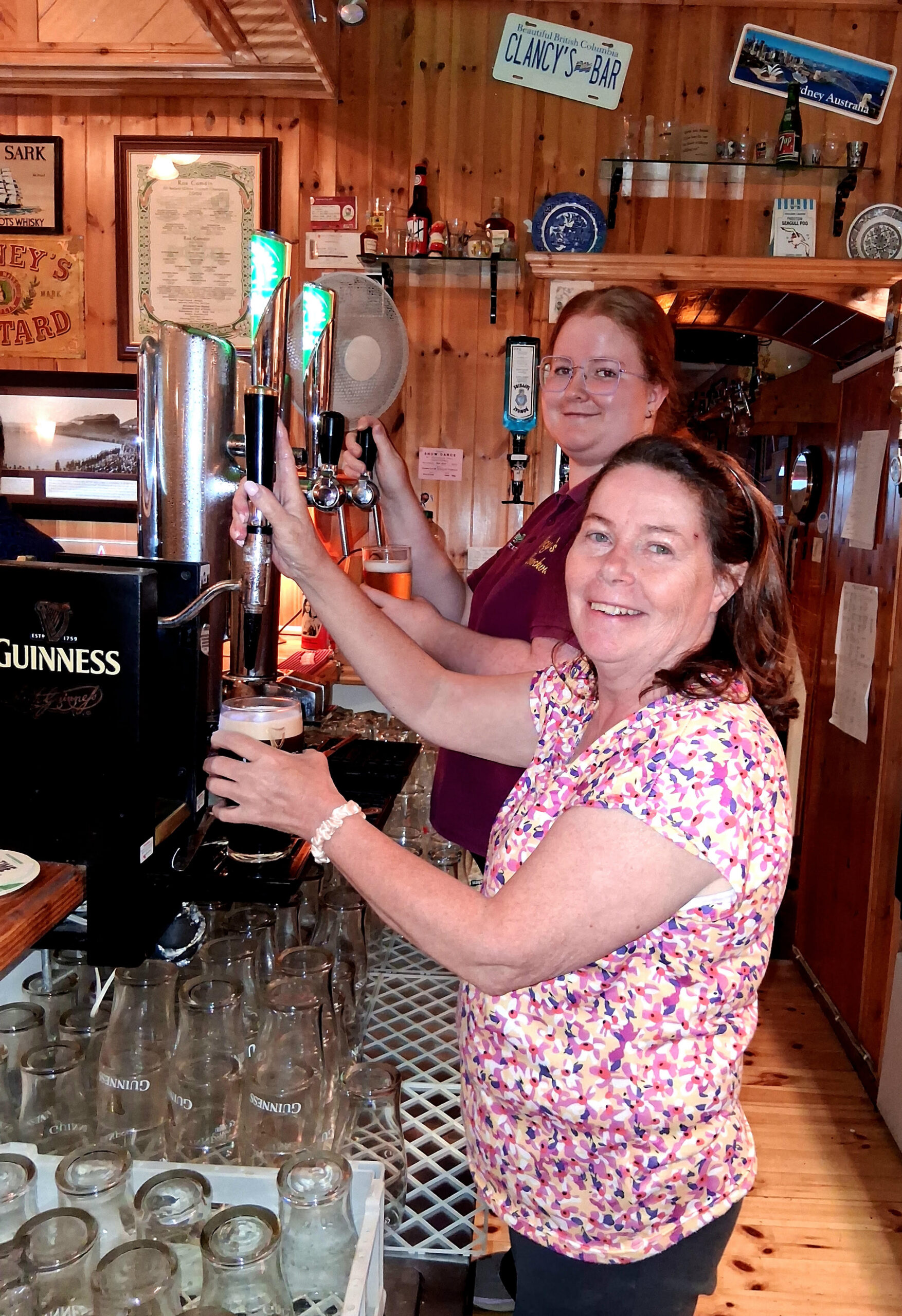
Ann McGonigle and Cara Monaghan behind the bar at Clancy’s. Ann works full time in the business with help from her son Michael and a small number of part time staff
Perhaps the most revealing part of Michael’s story is how he describes the role of Clancy’s in the community. For him, the pub is not simply a licensed premises. It is somewhere people come to meet, talk and, sometimes, simply be around other people. “You are a counselling service as well,” he says. “You can see that people have a load on them. You know the person so well that you can say, ‘Are you alright?’”
Customers do not necessarily have to drink. “We have people who come in and drink one Diet Coke or a pint of blackcurrant and we don’t mind because people need a place to go.” That social function, Michael argues, is increasingly overlooked. “Pubs are demonised. We all know people who drink too much, but if you think people drink too much in a pub, you should see how many bottles are going into the bottle bank every day showing how much people are drinking at home now.”
For Clancy’s, the 150-year milestone is therefore both a celebration and a moment of reflection. Three pubs in the wider area did not reopen following Covid, while others have changed direction and become restaurants. The traditional rural pub model is under pressure from rising costs, changing demographics, reduced disposable income and an increasingly challenging regulatory environment. Yet Clancy’s continues to open its doors.
Michael’s mother is waiting to see whether he will eventually take over the reins. He wants her to be able to enjoy her retirement, but knows that stepping into the family business is a decision that cannot be made purely on sentiment. For now, the future remains uncertain.
“The future is scary enough as you don’t know what way things will go,” says Michael.
But after 150 years, Clancy’s Bar remains firmly embedded in the fabric of Knockvicar – a place where a good pint is taken seriously, where GAA and community life intersect, and where the pub continues to perform a role that goes far beyond the sale of drinks.
“We definitely feel forgotten about from the government,” Michael says. “All we get is soundbites.”
For Clancy’s, however, the more immediate task is ensuring that there is a viable business there for the next generation to inherit.