


The new spirit of distribution
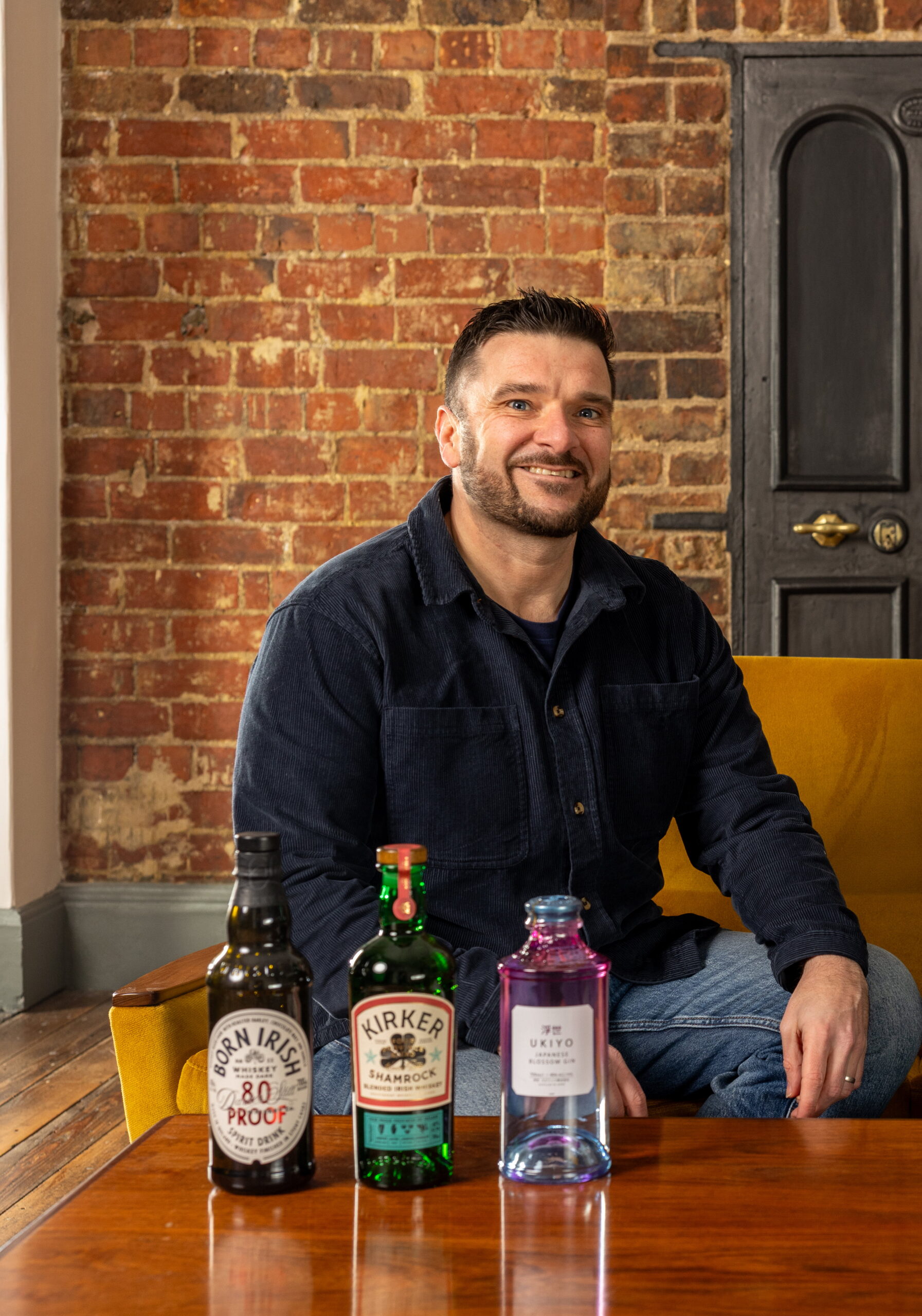
Drinksology Kirker Greer’s chief commercial & strategy officer Ryan McFarland
Ryan McFarland is a drinks industry veteran. Spanning twenty years his CV includes some of the biggest names in global drinks, including Rémy Cointreau, Bacardi and Molson Coors, where he spent nine years as general manager of its Irish business before moving into international roles focused on innovation and strategy. Three years ago, however, he returned to Belfast and joined a very different kind of drinks business. Drinksology Kirker Greer (DKG) had begun life as a creative and design agency specialising in alcohol, but by the time McFarland arrived it was already evolving into something considerably broader: a group combining creative services, brand development, spirits production and, through Spiritly, direct-to-consumer and business-to-business distribution.
For McFarland, that combination was part of the attraction. “I’m a drinks industry lifer,” he says. “I had spent much of my career working for very large businesses, which can sometimes move at the speed of an oil tanker. Here, I saw the opportunity to be the speedboat.” The speedboat analogy comes with an immediate caveat. “The only problem with being a speedboat is that you feel every bump!” he laughs. Nevertheless, the past three years have seen considerable growth. DKG says it has doubled in size, increased its staff by around 80% and invested significantly in infrastructure.
The group now employs around 50 people across Belfast and the UK, with McFarland citing compound annual growth of approximately 28% over the period. The wider drinks environment, of course, has hardly been straightforward. Rising costs, changing consumer behaviour and continued pressure on hospitality have created a challenging backdrop. It is against that landscape that DKG has chosen to expand another part of its business into the Republic of Ireland. Spiritly Trade ROI is a digitalfirst specialist wholesaler focused on premium spirits and wine. Its proposition is deliberately narrower than that of a traditional broadline drinks wholesaler, with more than 5,000 products available and an emphasis on premium, luxury and harder-to-source categories. The key word, however, is not disruption. It is complement. “We want to complement the Irish trade, not compete with it,” McFarland says.
From creative agency to drinks ecosystem
To understand the Spiritly proposition, it helps to understand how DKG got here. The company was established around 16 years ago as a design and creative agency specialising in alcohol. Its work has ranged from brand development and packaging to bar design, visitor experiences and the creation of hospitality concepts. DKG has worked with Irish Distillers, the Guinness Storehouse and The Dead Rabbit in New York, while its design and experience work has extended to distilleries including Roe & Co in Dublin and projects at Hinch Distillery. The creative operation remains central to the business.
“We see design as integral because it keeps our fingers on the pulse of what is happening in the industry and allows us to influence trends,” McFarland says. The work can begin with a relatively simple innovation brief, or extend into something much more comprehensive: a brand name, trademark, visual identity, bottle, liquid, distillery concept and visitor experience. DKG’s work at Roe & Co, for example, included the Mind Map Room, an experience designed to explore the flavours and creative thinking behind whiskey.
Elsewhere, the company has worked on the visitor experience at Hinch and continues to undertake design projects across the Guinness estate. There is a commercial calculation behind the creativity, too. “These experiences are about creating an emotional connection with the consumer,”
McFarland says. “But they are expensive assets, so they have to work. There’s no point in building a beautiful distillery that nobody visits.” Much of DKG’s international work is confidential, he adds, meaning there are projects the company cannot discuss publicly. But the underlying principle is consistent: use creativity to solve commercial problems and create stronger connections between brands and consumers. That thinking eventually led to what DKG calls its “Create, Build, Deliver” model. “We create brands, bars and experiences. We build our own brands and intellectual property through Kirker Greer. And we deliver the customer and consumer experience through Spiritly.”
In McFarland’s description, the result is effectively a 360-degree alcohol and beverage ecosystem. A brand can be conceived, developed, built and ultimately delivered to an outlet and consumer within different parts of the same group. The important element is the feedback loop. “We learn at every stage and feed those insights back into the next innovation project,” he says.
The Spiritly proposition
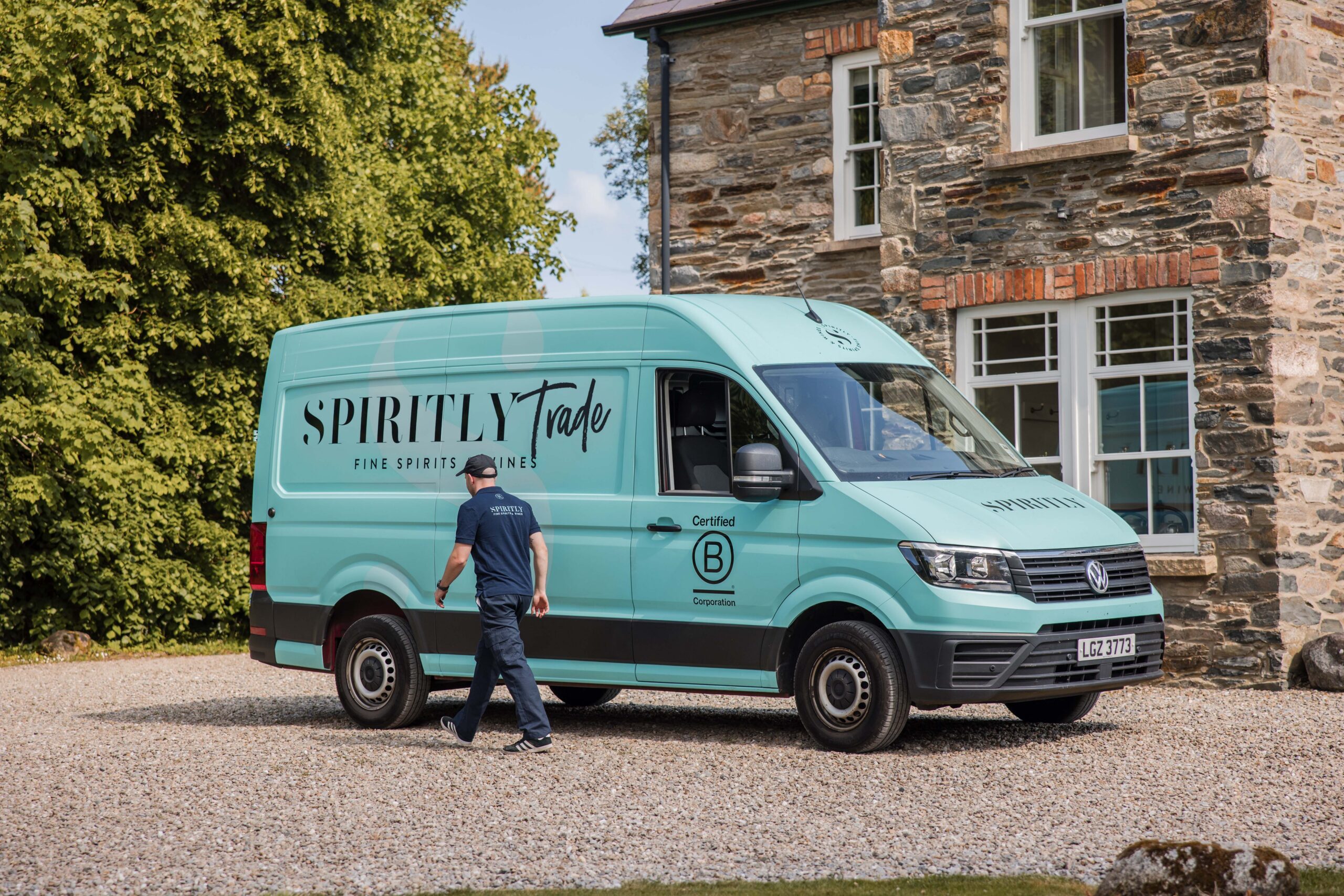
Spiritly Trade is a digital-first specialist wholesaler focused on premium spirits and wine
Spiritly is the delivery component of that model. Spiritly.com operates as the group’s direct-to-consumer business, while Spiritly Trade has developed from the smaller wholesale operation DKG previously maintained in the North. The distinction matters. Spiritly Trade is not intended to replicate the full-service model of Ireland’s established drinks wholesalers.
“We’re essentially a digital-first specialist wholesaler focused on premium spirits and wine,” McFarland says. The business can draw on a sourcing base that spans both the UK and EU, while its existing consumer operation gives it access to a substantial range of products. That range is one of its principal points of difference.
But McFarland is keen to position the business within, rather than against, the existing Irish distribution landscape. “The Irish wholesale network is very sophisticated,” he says. “There are more than 100 wholesalers operating across the country. We don’t believe one business can cover every possible spirit, expression, flavour profile or niche category.”
Spiritly’s role, therefore, is to fill some of the gaps created by an increasingly diverse premium drinks market. A bar might have an established core wholesale relationship but want to develop a more extensive cocktail programme, premium back bar or specialist spirits list. That could mean sourcing a particular mezcal, Japanese whiskey, Australian whiskey or Belgian spirit that is not routinely carried by its existing supplier.
Spiritly can also supply major brands and McFarland points to Jameson and Gordon’s as examples but he sees breadth and specialist sourcing as the more important part of the proposition.
A market asking for another route
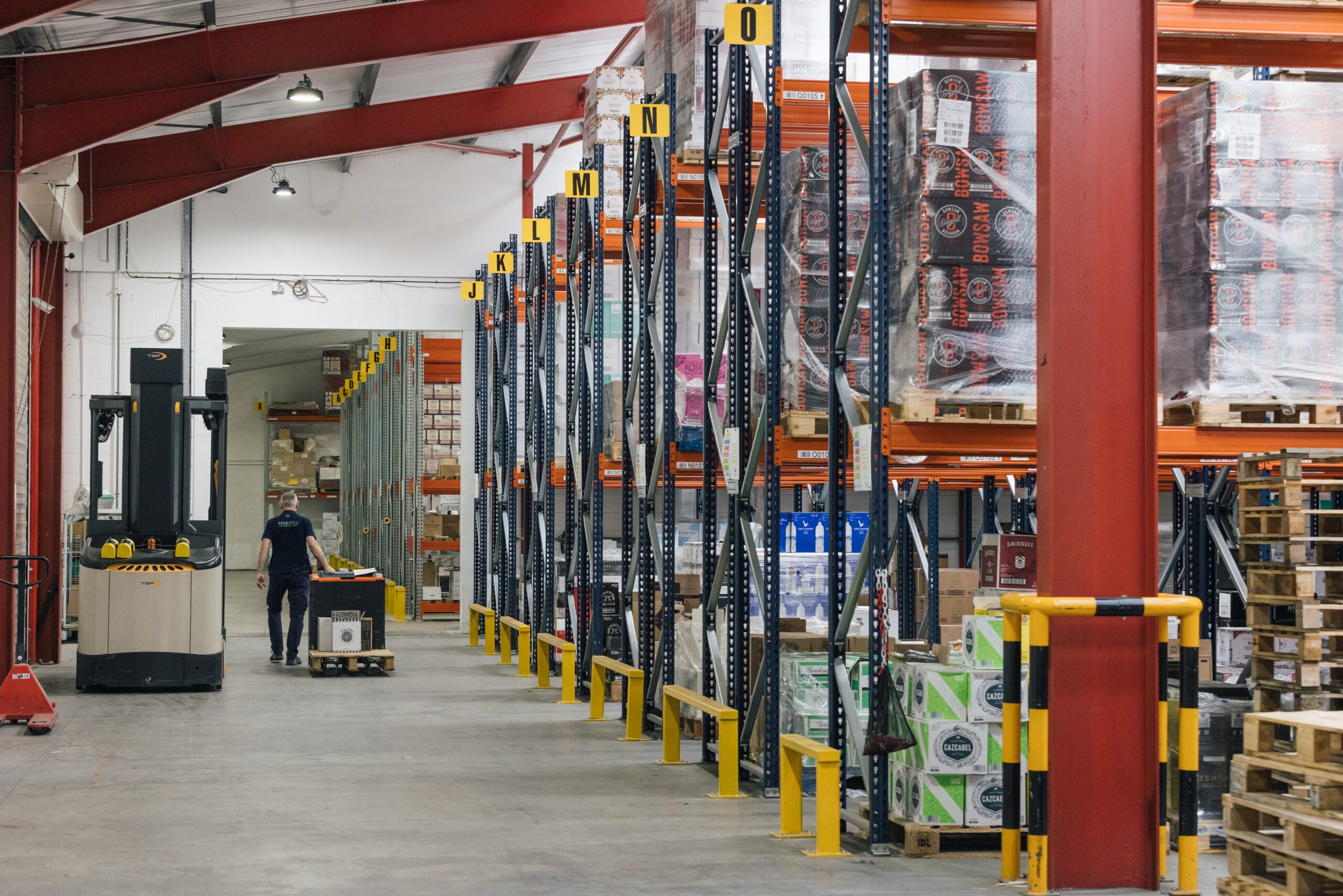
Spiritly Trade’s warehouse. With more than 5,000 products available and an emphasis on premium, luxury and harder-to-source categories, Spiritly’s proposition is deliberately narrower than that of a traditional broadline drinks wholesaler
The decision to launch Spiritly Trade in the Republic was not, McFarland says, based solely on an internal growth plan. “The simple answer is that the trade was already asking us to do it.”
Irish customers were contacting the business regularly looking for help sourcing individual products. Rather than treating those requests as isolated opportunities, DKG decided to test whether there was a broader proposition. The company ran a trial involving 20 outlets across Ireland, deliberately selecting a mixture of locations and businesses. Among them were high-end operators including Cask in Cork and the Westbury in Dublin, alongside businesses such as Dillon’s Hotel in Letterkenny. The objective was to establish whether the proposition was essentially a Dublin or Cork phenomenon or whether the demand extended further. Repeat orders from several of the trial customers gave DKG confidence that the model had relevance beyond the largest urban markets.
For customers, the attraction is partly range and partly flexibility. Because Spiritly operates across both consumer and trade channels, it can carry products that might otherwise struggle to justify the rate of sale required by a traditional wholesale model. Stock can potentially be supported by demand through the consumer business as well as the on-trade. There is also flexibility around ordering. Spiritly Trade operates on a bottle-pick basis, meaning customers do not necessarily have to commit to full cases and can place mixed orders.
Orders over €400 qualify for free delivery, while account set-up is handled digitally. That digital-first approach is perhaps the clearest indication of how Spiritly wants to operate differently.
Making wholesale more transparent
For McFarland, digital-first is less about technology for its own sake than about removing friction from the ordering process. The platform operates 24 hours a day, allowing bar managers and other customers to browse products, check availability and order outside traditional office hours. Stock information is also central to the proposition.
“If we’ve only got 10 bottles left, we want the customer to know that,” he says. “And if something they’ve been waiting for comes back into stock, we’ll tell them.”
That transparency extends to products Spiritly cannot supply. “If we can’t get something for a customer, we’ll tell them,” McFarland says. “We’d rather support them in finding it elsewhere than pretend we can supply something we can’t.” It is a refreshingly straightforward philosophy in a category where availability can sometimes be opaque. The aim, he says, is to combine competitive pricing with “really good and considered service”.
Differentiation in a difficult market
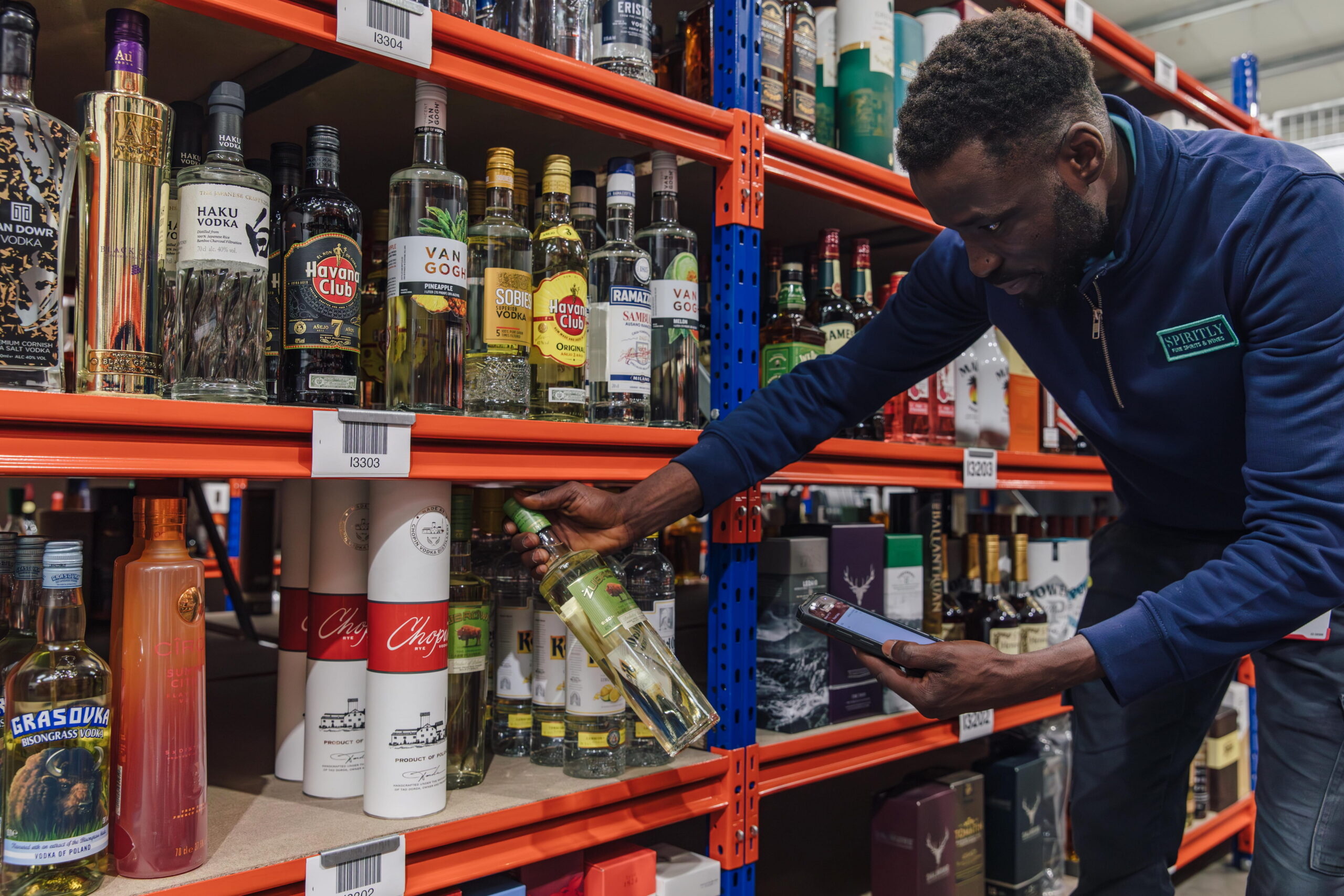
Spiritly can offer outlets a particular mezcal, Japanese whiskey, Australian whiskey or Belgian spirit that is not routinely carried by its existing supplier
McFarland’s assessment of the Irish on-trade is pragmatic. “The industry is undoubtedly challenging,” he says. “We’re seeing outlets close, but at the same time some of the businesses doing very well are those with a differentiated proposition.”
That differentiation can take many forms. For one operator it might mean cocktails; for another, an exceptional spirits range or a particular category specialism. Over the past decade, Irish back bars have become considerably more diverse, with niche, premium and luxury brands joining the established core categories.
Whiskey and gin were early drivers of that development, but the premiumisation trend has extended into mezcal, agave spirits, Japanese whiskey and an increasingly broad range of international categories. Not every venue needs to stock everything. But for an operator that wants to build a reputation around a particular category, access to breadth without having to carry significant quantities of stock can be useful.
Independent cocktail bars, meanwhile, naturally require breadth because their bartenders need access to a wide variety of spirits to create different drinks. Spiritly’s core customer base is what McFarland describes as HORECO – hotels, restaurants and cocktail venues – but the intention is not to exclude other types of operator.
More than a box of bottles
Education is another area where DKG hopes to differentiate its offer. Spiritly Academy has been developed from the training expertise within DKG’s creative business, which has worked with some of the world’s leading bars on staff development and training programmes. McFarland is keen to frame this as something broader than simply addressing gaps in product knowledge.
“As an industry, we need to recruit, retain and develop staff consistently,” he says. The training can therefore be tailored to experience and role. Someone moving from bar back to bartender might need support with the fundamentals of working behind a bar, while a more experienced employee could access wine, category or cocktail education. Importantly, McFarland says, the programme is not intended simply to become a series of brand presentations. “We want to bring more value to an outlet than simply delivering a box.”
Building partnerships rather than simply accounts
Over the next three years, McFarland says the ambition is not simply to accumulate trade accounts. Instead, Spiritly wants to build a focused network of partner outlets where it can provide support beyond distribution, whether that means education, sourcing, creative work, product knowledge or help developing an outlet’s proposition.
Geographically, Dublin, Cork, Galway and Limerick represent obvious opportunities, but the hotel sector gives the business a naturally broader footprint. The ultimate measure of success, McFarland says, will be whether customers genuinely value the service. The Irish launch of Spiritly Trade is therefore not simply a new wholesaler entering an established market. It is an extension of a much broader experiment in how a modern drinks business can operate across the different stages of the value chain.
And McFarland is clear about the role he believes Spiritly can play. “What we’re bringing is a specialist premium range, digital accessibility, flexible ordering and additional support around education, sourcing and the development of the outlet. “If we can do that successfully in Ireland, while supporting the existing trade rather than competing with it, then I think Spiritly Trade has a very useful role to play.” ■