

Whiskey has a gender problem
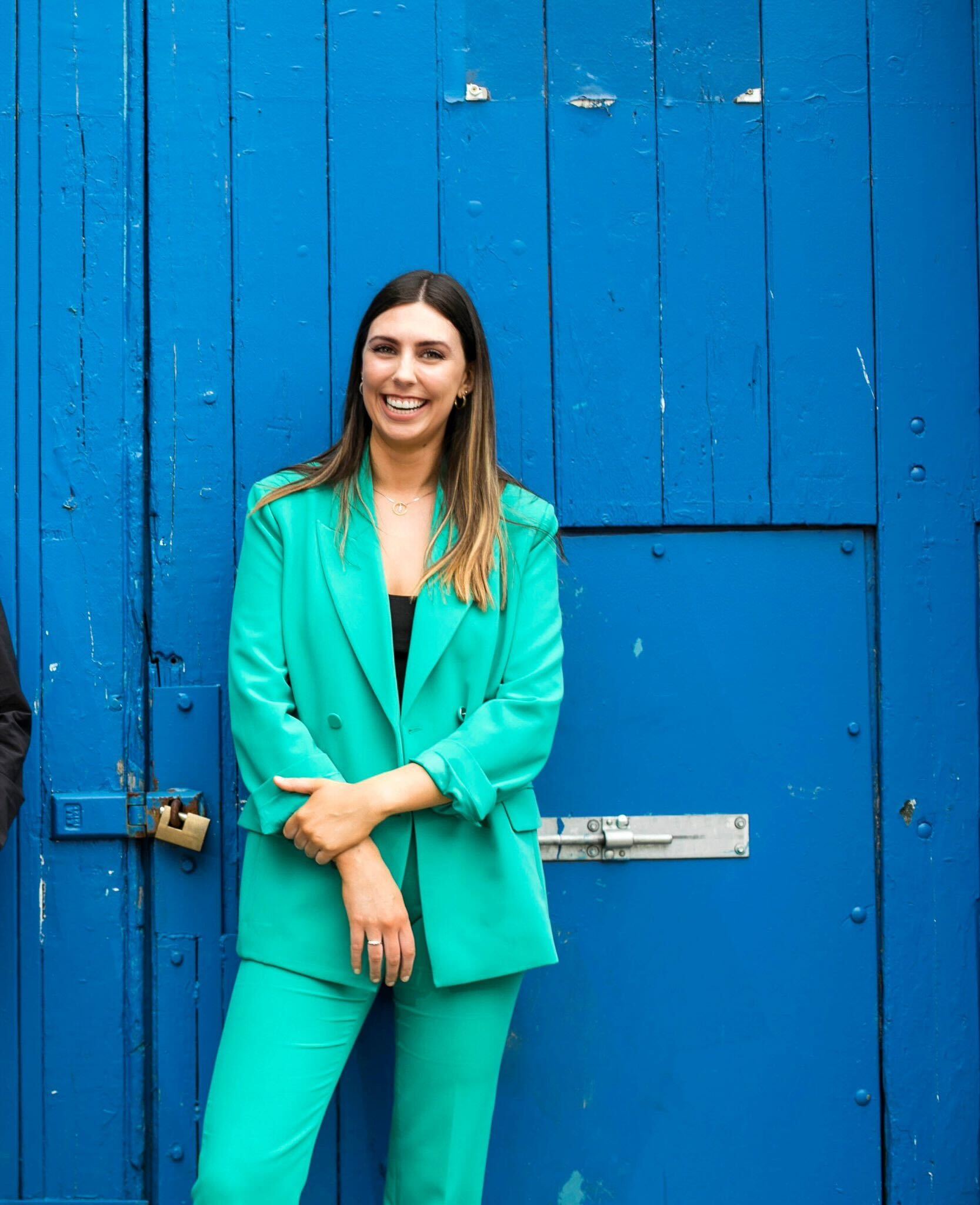
Alice Carroll, co-founder of Foxes Bow Irish Whiskey
Can you tell me how the brand Foxes Bow came about and where the name came from?
Having worked with some of the biggest whiskey brands in the world, I felt there was something missing that spoke to the new generation of whiskey drinkers. Many existing Irish whiskey brands, particularly those I have worked with, were long-established and highly riskaverse. Their strategy relied on proven formulas designed to protect existing consumers rather than attract new ones. This created an opportunity to build a brand that genuinely reflected a new generation of whiskey drinkers. At the same time, my co-founder Tony Foote was working in San Francisco at Google’s Moonshot Factory. He felt that Irish whiskey brands did not reflect the modern Ireland he is proud to come from. During Covid, we used that time to test whether it would be possible to create a brand that filled this gap. Once we were confident the opportunity was real, we engaged Bord Bia and began developing the brand that eventually became Foxes Bow. The name Foxes Bow comes from a small side street in Limerick that connects two of the city’s main shopping streets. It is a blink-and-youmiss- it street, yet it has historically been home to creative businesses.
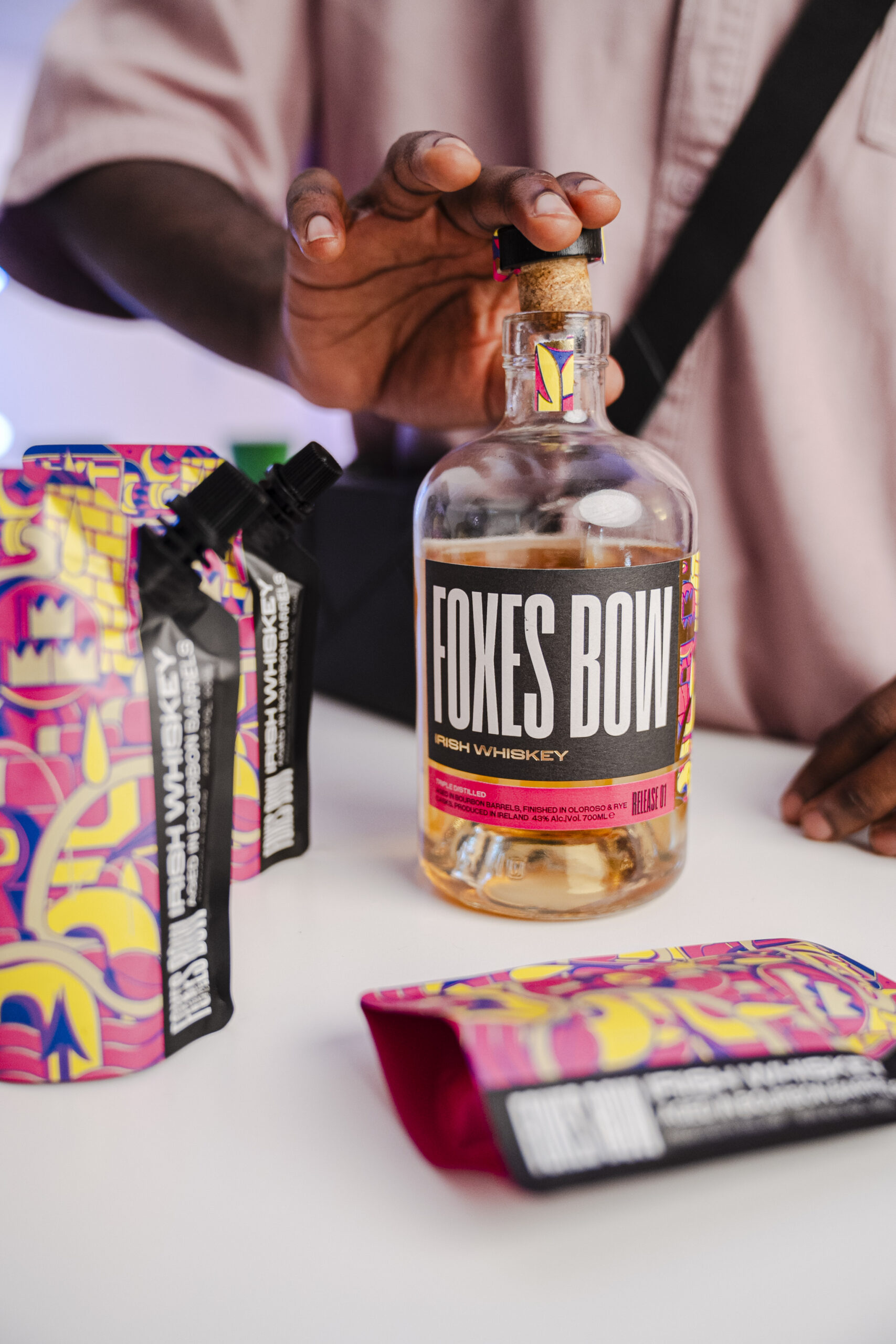
A bottle of Foxes Bow whiskey with 40% missing, denoting the gap between who drinks whiskey and who gets treated as the authority on whiskey
What sparked the idea for the “40% Missing” campaign, and why did you choose International Women’s Day as the moment to launch it?
The idea for the 40% Missing campaign emerged from my personal experience in the whiskey industry. In 2014, I worked as a whiskey ambassador representing several of the world’s most recognised whiskey brands. Despite that preparation, tastings frequently included the same question: “Do you actually drink whiskey?” Sometimes it was delivered jokingly. Sometimes it carried a more sceptical tone. Another predictable interaction involved someone attempting to quiz me in order to prove greater expertise. At the time, those moments felt like isolated incidents. A decade later, the pattern is clear. Whiskey still assumes that the default drinker, and the default expert, is male. This becomes even more visible when founding a brand. The pattern extends beyond advertising into deeper structures of authority: who is treated as credible, who is assumed to have expertise, and who must continually prove legitimacy. Many people are surprised to learn that women represent approximately 40% of whiskey drinkers in the United States. While some brands have begun incorporating more women in advertising, the deeper issue concerns authorship. Women are rarely positioned as the people shaping the narrative of the category. They are not consistently trusted to influence how whiskey evolves, despite representing a substantial share of its consumers. In practice, the industry is comfortable accepting women as customers without granting them equal authority within the category. When examining who whiskey companies present as authorities — whether celebrity endorsers, master distillers or brand founders, the figure positioned as the expert is overwhelmingly male.
The visual metaphor of a whiskey bottle deliberately missing 40% is striking. How did you land on that specific figure and creative approach?
The goal was to create something visually arresting, particularly during International Women’s Day when the volume of messaging is extremely high. The concept needed to communicate its message instantly while also prompting people to look more closely. A whiskey bottle missing 40% of its liquid achieves that effect. The visual appears wrong. The absence is immediately noticeable, prompting curiosity and further engagement. The number itself reflects the fact that women represent roughly 40% of whiskey drinkers in the United States. Removing that proportion from the bottle illustrates how significant women are as consumers while highlighting how absent their voices remain from positions of authority within the category.
You highlight the gap between who drinks whiskey and who is seen as an authority in the category. What does that gap look like in practice today?
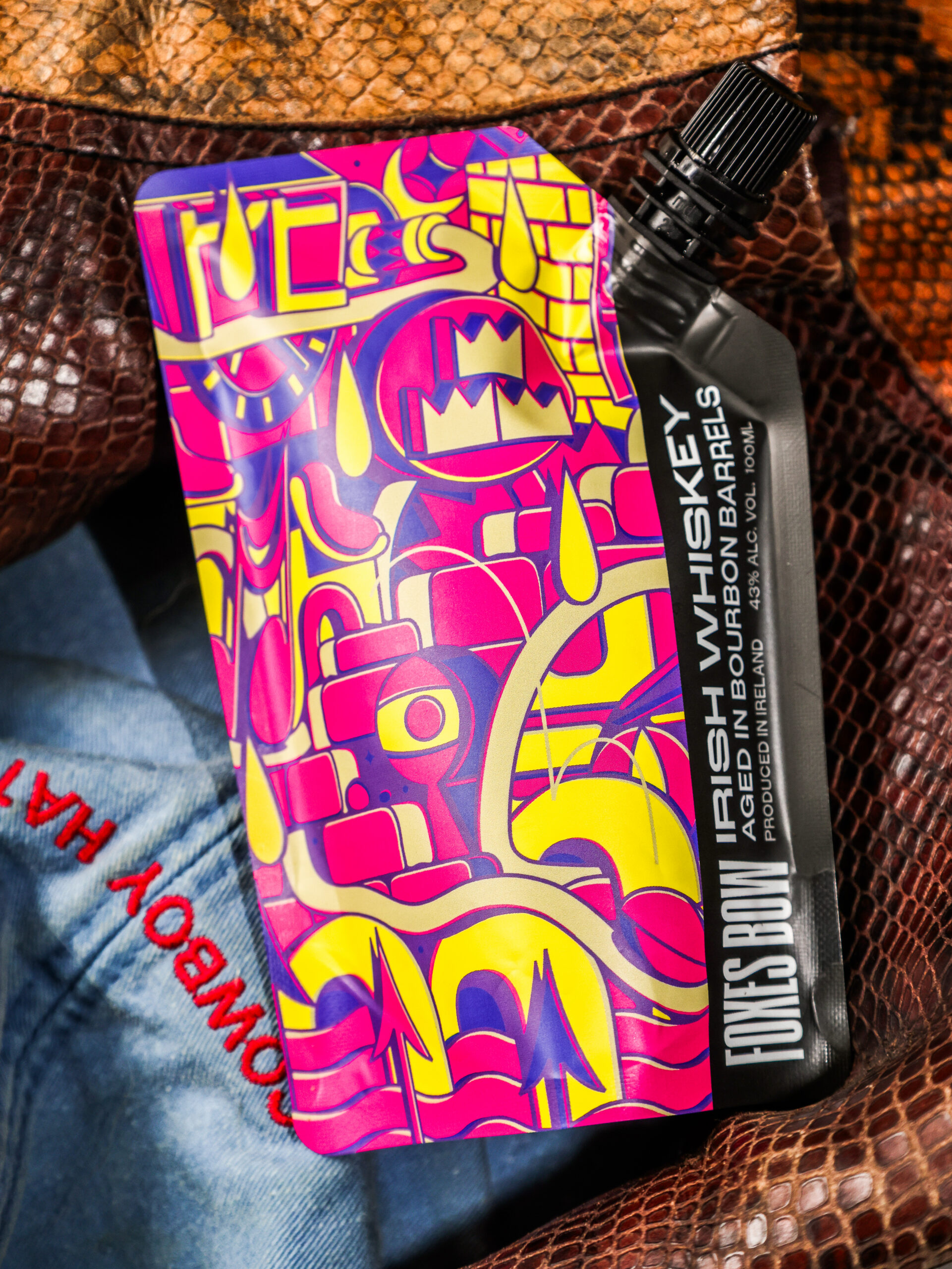
Many people are surprised to learn that women represent approximately 40% of whiskey drinkers in the United States
The gap appears in two primary ways. The first involves representation in marketing and branding. Advertising, celebrity partnerships and brand ownership narratives overwhelmingly position men as the face of whiskey. This assumption appears throughout the category. It exists in the names that dominate whiskey’s vocabulary — John (Jameson), Jack (Daniel’s), Jim (Beam), Johnnie (Walker) – reinforcing the perception that masculinity is built into the category’s identity. It also appears in historical advertising tropes that either sexualised women or inserted them into campaigns as symbolic gestures of modernity. Research conducted by the OurWhisky Foundation analysing Instagram content from 150 of the world’s largest whisky brands found that these brands posted 228% more images featuring men than women. This often leads the conversation toward “inclusion.” Brands add women to campaigns or create limited editions tied to Women’s History Month. These gestures signal awareness without shifting underlying power structures. The deeper issue concerns authorship. Only around 2% of whiskey companies globally are owned by women. Leadership roles across major whiskey companies remain overwhelmingly male. Authorship is the critical distinction. Visibility allows someone to appear within the story. Authorship determines who writes it. True authorship means women shape the meaning of the category — influencing taste, culture, history and future direction.
In your view, why has the whiskey industry been slow to reflect the diversity of its own consumer base?
For decades whiskey relied on a mythology centred on tradition, masculinity and the leather-chair lounge. This identity was commercially successful. It also created a strategic constraint. When a brand believes its core consumer fits one narrow archetype, strategic decisions begin to exclude real customers. Media buying targets “men who like whiskey,” creative briefs code credibility as masculine, and brand experiences reward gatekeeping rather than curiosity. Attempts to include women sometimes fail because they retain the assumption that women are outsiders who must be invited in. The Johnnie Walker “Jane Walker” example illustrates this challenge: a wellintentioned effort that many perceived as pandering because it treated women as a novelty rather than recognising their existing presence. Beer offers a comparable example. The category spent decades designing itself explicitly around male consumers, which did not simply exclude women — it ultimately limited category growth. A category cannot treat a substantial portion of its consumers as marginal participants while expecting sustained relevance and growth. Encouraging signs of progress do exist. In January 2026 the Scotch Whisky Association appointed its first female chair. Structural leadership shifts signal deeper change than surface-level marketing. Other developments demonstrate how authorship can emerge when women participate as partners with genuine creative and commercial influence rather than as symbolic figures.
What changes do you expect in Irish whiskey over the next decade?
Irish whiskey is ripe for reinvention. Many people are unaware that whiskey originated in Ireland. The category has lost ownership of that origin story. Recovering that narrative creates an opportunity to reposition Irish whiskey as one of the most innovative and culturally relevant whiskey categories globally. The next decade presents an opportunity to reclaim leadership within the global whiskey conversation.