




Dingle Gin bets on bold redesign to fuel next phase of international growth
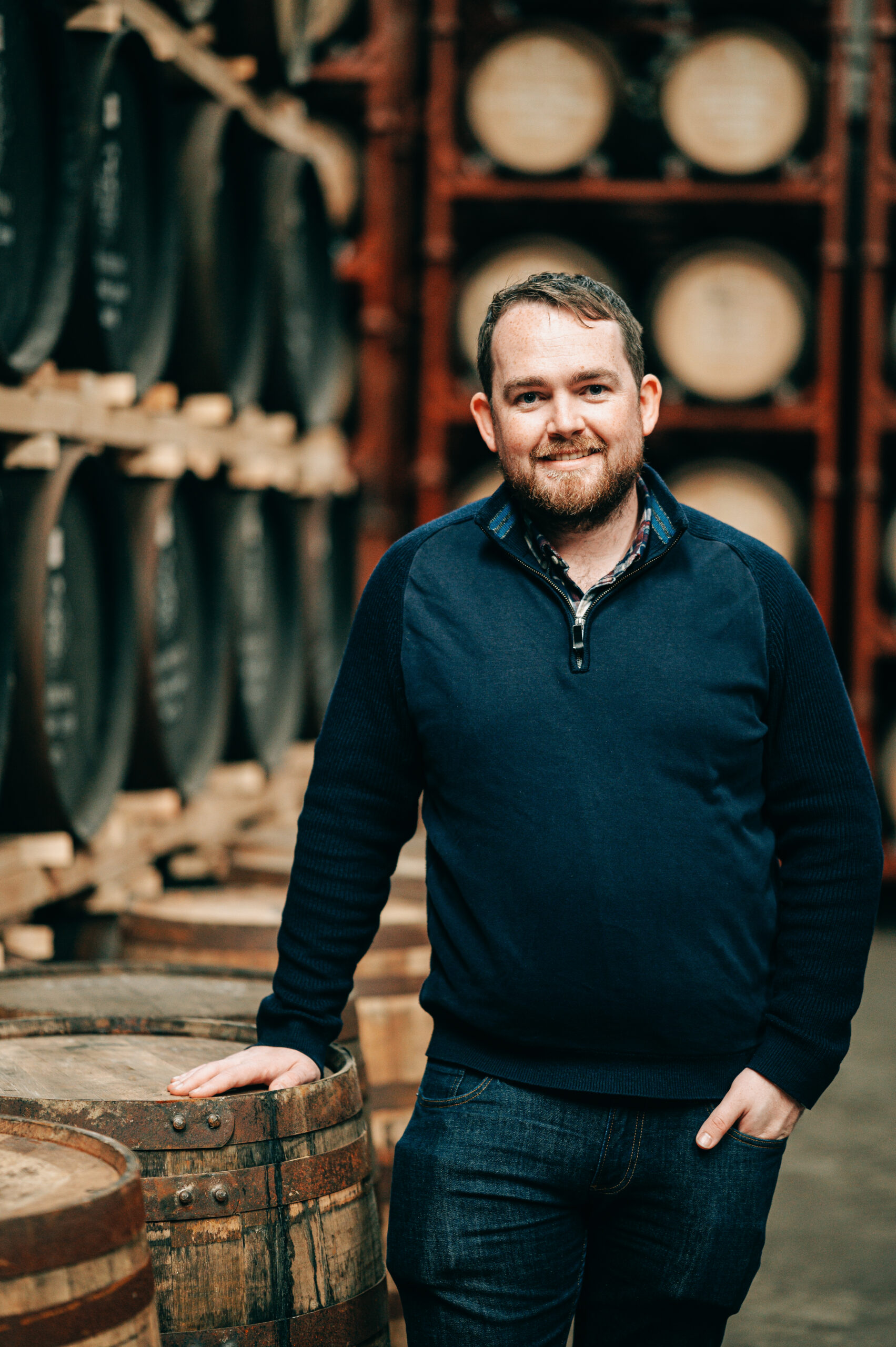
Managing director of Dingle Gin, Elliot Hughes
For managing director Elliot Hughes, the upcoming relaunch of Dingle Gin represents far more than a cosmetic update. It is a strategic repositioning designed to strengthen the brand’s export potential, improve visibility in international markets and reinforce Dingle Gin’s place as one of Ireland’s leading premium spirits brands. “We’re 13 years old now, so it gives us an opportunity to talk about the brand again,” Hughes says. “Sometimes you need a reason to get people to think about you.”
The redesign marks a bold move for a brand whose original bottle had become highly recognisable to Irish consumers. But while the existing design carried strong familiarity at home, Hughes says feedback from overseas markets increasingly suggested the brand needed stronger visual impact. “People in export markets didn’t really like the bottle,” he explains. “Irish consumers knew it because we were one of the first premium Irish gins, but internationally the see-through element didn’t give enough standout on a busy back bar.” The challenge was particularly noticeable in competitive premium spirits environments, especially in the United States, where shelf presence and bartender recommendations play a major role in consumer purchasing decisions. “In the US market, consumers rely on recommendations from bartenders far more than we do here,” Hughes says. “You need a bottle that catches attention immediately.”
Strong brand loyalty
Despite those limitations, Dingle Gin has continued to grow steadily both in Ireland and abroad, driven largely by strong word-of-mouth and loyalty within the on-trade. “The gin still managed to grow because people simply asked for it,” Hughes says. “Sometimes I’ll walk into a bar and discover they’re using Dingle as their house pouring gin.” That trend towards premiumisation within the hospitality sector has become increasingly important for the brand. Hughes believes many bars and restaurants are now prioritising quality over price-led offerings, even for house pours. “If someone asks for a house wine in somewhere like The Shelbourne, they’re not going to give them poor quality wine,” he says. “We’re seeing more bars and restaurants applying that same thinking to gin.”
A bottle inspired by the Dingle Peninsula
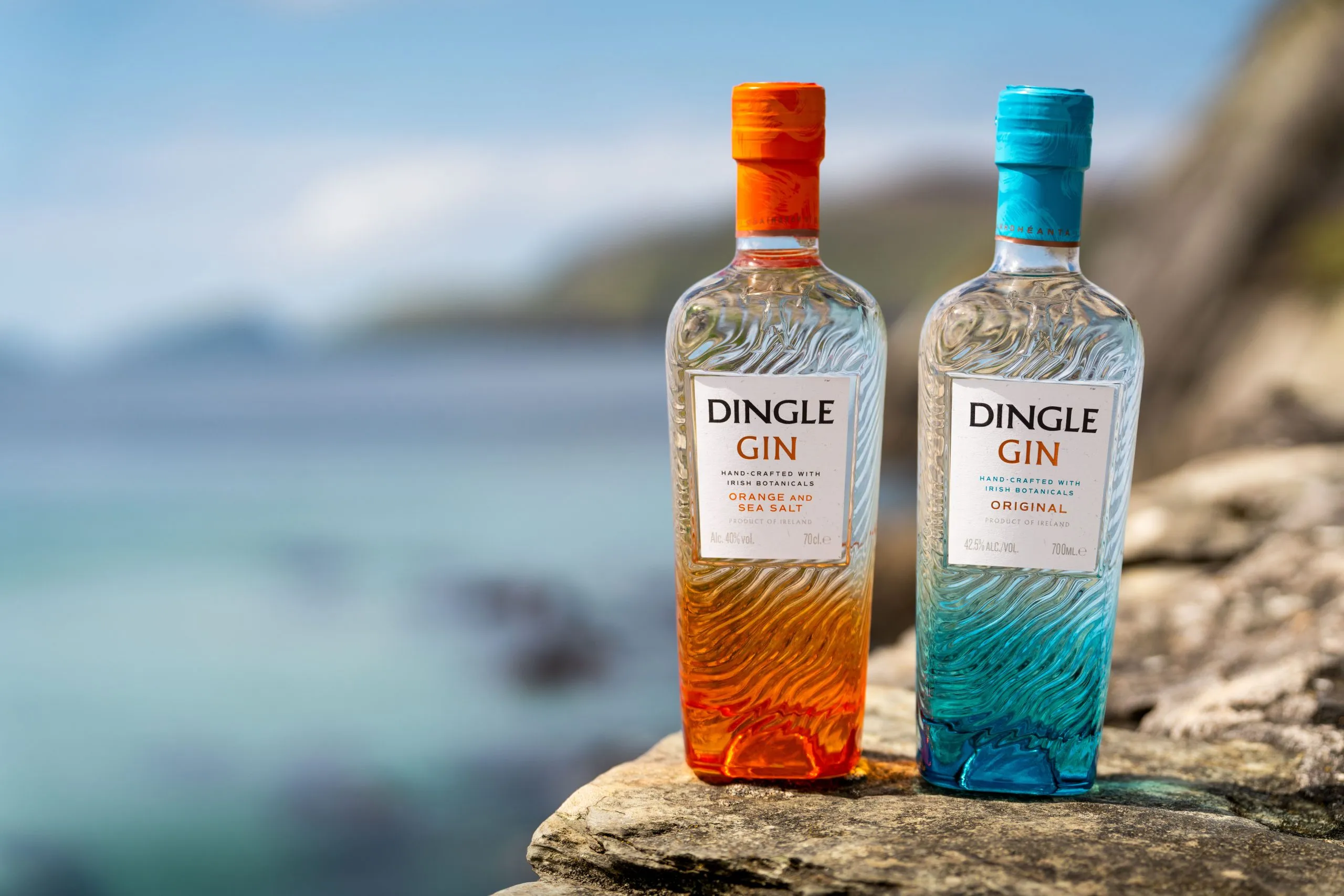
Drawing inspiration from the rugged Atlantic landscape, the redesign retains the recognisable character of the original while bringing a more refined and confident identity to the range. However, the liquid remains the same.
The new bottle design takes much of its inspiration from the natural landscape surrounding the distillery itself. “It’s built around the landscape, the peninsula and the sandy beaches,” Hughes explains. “There’s much more texture and feel to the bottle.” That tactile quality reflects broader trends within premium spirits packaging, where consumers increasingly value bottles that deliver a stronger sense of craftsmanship and authenticity. “Consumers are really leaning into textured packaging now,” he says. “It gives us much more opportunity to tell the story of where the product comes from.”
The redesign will also allow the business greater flexibility for future innovation and product development. “This bottle gives us more opportunities for additional product lines and flavour extensions in the future,” Hughes says. At the same time, the company is conscious that changing a recognisable bottle carries risks, particularly with loyal existing consumers. “There are definitely people who’ve said, ‘you can’t change that bottle — it’s iconic’,” Hughes says. A major focus of the relaunch campaign will therefore be ensuring both publicans and consumers understand that while the packaging is evolving, the liquid itself remains unchanged. “We want people to know it’s the same product and not a rival one,” he says. To mark the occasion, the distillery is also launching Dingle Gin Orange & Sea Salt, built on the same awardwinning botanical recipe.
Built initially to support whiskey
Dingle Distillery was established in 2012 by Hughes’ father, Oliver Hughes, as part of the wider Porterhouse hospitality and brewing business. While whiskey was always the longterm ambition, gin and vodka were initially developed to generate cashflow while the whiskey matured. “When we started Dingle Distillery, the reason we did gin and vodka was really to support whiskey production,” Hughes says. “At the time, we had our own bars, so the thinking was we’d pour it there and maybe get a few bars around Dingle to stock it.” The company had modest ambitions in its early years and little expectation of how dramatically the gin category would evolve globally. “Within two or three years, gin started to explode,” Hughes recalls. “We weren’t developing a product to meet growing demand, we just happened to already have one there. We were very lucky and able to take advantage of that.”
The rapid growth of premium gin transformed Dingle from a small supporting spirits operation into one of Ireland’s bestknown independent distilleries. Hughes himself originally entered the family business through the operational side of the Porterhouse after finishing college. “My knowledge of premium spirits at the time was pretty limited,” he laughs. “I was more into cheap cider in college!”. His role within the company evolved rapidly following the death of his father shortly after he joined the business. “My father passed away about two years after I entered the business, so I stepped into that role fairly quickly,” Hughes says. The wider family business has deep roots in Irish brewing and hospitality. Oliver Hughes and his cousin first launched a brewery in Blessington in 1983 before later opening the first Porterhouse pub in Bray in 1989 and subsequently the well-known Temple Bar brewery in 1996.
Why Dingle?


Export growth gathering pace
While Ireland remains a core market, Hughes says the company’s major future opportunities lie overseas, especially in the US. “We grew 35% in spirits across the board in the US last year and we expect to exceed that this year,” he says. Rather than attempting nationwide expansion immediately, the company is concentrating on a targeted number of key states. “We tend to focus on six or seven states,” Hughes explains. “There’s no point spreading yourself too thin across 20 states and not achieving anything meaningful.” The company is also exploring opportunities in emerging markets including India and Nigeria, both of which Hughes sees as potentially important future destinations for Irish spirits. “India is a significant market that’s opening up, especially with tariffs reducing under the EU trade agreement,” he says. At present, the company’s overall portfolio is split approximately 45% whiskey, 45% gin and 10% vodka. While Dingle Gin has gained strong traction domestically, Hughes acknowledges that the company’s whiskey business currently has greater penetration across mainland Europe. “Germany, the UK and France are strong whiskey markets for us,” he says. “The gin hasn’t yet achieved the same level of foothold.” However, the redesigned bottle is already helping improve distributor confidence internationally. “Our German partners are very excited about the new bottle and have already placed orders,” Hughes says. “Sometimes growth is simply about having the right partner in the right market.”
Facing a changing market
Like many premium drinks brands, Dingle Gin is also navigating changing consumer behaviour amid ongoing cost-of-living pressures. “We’re probably moving back towards more value-driven occasions now,” Hughes says. “Consumers are more cautious both at home and in the on-trade.” He believes rising prices have particularly impacted gin and tonic sales in pubs and bars. “If you compare the cost of a gin and tonic against a pint or a glass of wine, the gap has widened,” he says. “That’s definitely one of the challenges facing the category.” At the same time, Hughes believes the gin market has now stabilised after several years of explosive growth. “We’re probably past saturation point,” he says. “During Covid, retailers massively expanded the number of gin SKUs. That’s reduced again now.” However, Dingle benefited from establishing itself early within the premium Irish gin segment. “We were lucky because we became one of the core brands,” Hughes says. “Publicans didn’t destock us when the category tightened.” Looking ahead, Hughes says the ambition is straightforward: to establish Dingle Gin as a globally recognised premium Irish spirits brand. “We’ve achieved that in Ireland,” he says. “If over the next five years we can become a household premium gin brand across major European markets and America, that would be a huge success for us.”